AB Restoration Springfield Township
📞 908-560-5345
Springfield Township • NJ

Sewage Cleanup in Springfield Township.

IICRC S500 Category-3 protocol for sewage backup events — full PPE, porous-material removal, decontamination.

Local team in Springfield Township Honest, transparent pricing 24/7 emergency line
Equipment Industrial extraction + drying
Documentation Daily logs adjusters approve
Trades Reconstruction handled in-house
Service Overview

How We Approach It

Sewage backup is a Category-3 water loss under IICRC S500 — meaning the water is contaminated with pathogens and requires a different protocol than standard water damage. Full PPE, porous-material removal to the documented contamination line, EPA-registered antimicrobial, and air quality verification before reconstruction.

What's Included

  • IICRC S500 Cat-3 protocol
  • Full Tyvek + HEPA respirator PPE
  • Porous-material removal to flood line
  • EPA-registered antimicrobial
  • Air quality clearance before reconstruction
  • Insurance documentation

Prevention Measures That Actually Work

If you have had a sewer backup once at a {{city}} property, the conditions that caused it likely still exist. Prevention reduces the chance of a repeat.

  • Backwater valve on lateral drain. A one-way valve installed between your basement plumbing and the city main. When sewer pressure tries to push water back into your basement, the valve closes. Cost: $1,500-3,500 installed. The single most effective prevention measure for properties on combined-sewer or older municipal systems.
  • Sump pump with battery backup. If your basement has a sump pit, a battery-backup pump keeps it running during the power outages that often accompany the same heavy rain events causing sewer backups. Cost: $400-900 for the battery backup add-on.
  • Floor drain plug or standpipe. Mechanical or air-pressure-operated plug that seals your floor drain when reverse pressure is detected. Cost: $50-300. Less reliable than a backwater valve but cheaper.
  • Elevate vulnerable contents. If you have a finished basement, elevate electrical outlets, store boxes off the floor, do not place irreplaceable items at floor level. Mitigation matters when prevention fails.

Our crew does not install these — they are plumbing scope, not restoration scope — but we can refer to qualified plumbers in the {{city}} area who do this work routinely.

Sewer Backup Insurance — the Endorsement You Probably Need

This catches a lot of {{city}} homeowners by surprise after their first basement backup. Standard homeowners insurance does NOT cover sewer backup. The fix is a sewer/water backup endorsement added to the policy. Cost: typically $50-150 per year. Coverage: usually $5,000-25,000 of cleanup + reconstruction (you can buy higher limits).

Without the endorsement, sewer backup losses are out-of-pocket. A typical {{city}} basement Cat-3 cleanup runs $8,000-25,000 plus reconstruction depending on basement finish level and contamination extent. With the endorsement, the carrier pays after deductible.

If you do not currently have the endorsement: call your agent today, not after a backup. Adding it is fast and cheap. If you already had a backup and discovered the gap: the next-cheapest action is to add the endorsement now to protect against the next event (which is unfortunately likely if your sewer infrastructure is older or in a combined-sewer-overflow area).

For our {{city}} clients we always discuss this on the first call so the coverage question is settled before the work scope is finalized. Insurance billing only proceeds after coverage is confirmed.

Process

Our Process

  1. 01

    Initial Inspection

    Moisture mapping with calibrated meters. Photo documentation. Cause-of-loss narrative. Loss category assignment per IICRC S500.

  2. 02

    Source Control + Containment

    Confirm water source is fully off. Isolate affected area with plastic sheeting + negative air pressure. Contaminated materials removed to documented flood line.

  3. 03

    Structural Drying

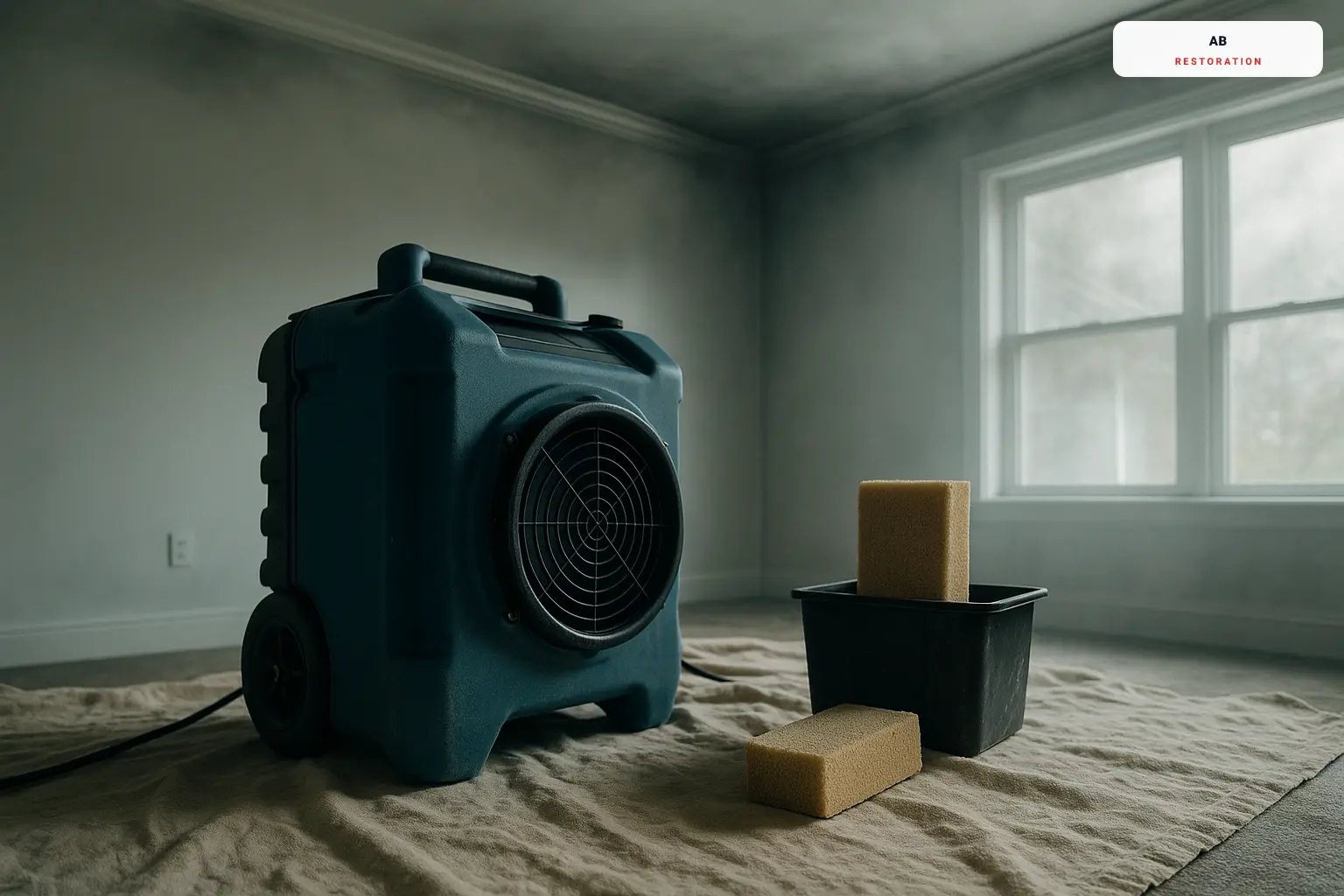
    Air mover placement calculated for affected square footage. LGR dehumidifier capacity matched to interior volume. Continuous monitoring until moisture content returns to baseline.

  4. 04

    Mold Prevention

    EPA-registered antimicrobial applied to substrate that contacted contaminated water. HVAC system inspection if water entered the air handling system. Final clearance confirms no microbial activity.

  5. 05

    Reconstruction to Pre-loss Condition

    Materials matched to pre-loss specification. Workmanship guarantee documented in the contract. Walkthrough with written punch list before final invoice.

The difference

Why Customers Choose Us

Real reasons. No invented stats, no manufactured awards.

  • 01

    Owner-Led Operations

    Direct access to the owner during your project, not a project-coordinator buffer. Decisions get made fast. Issues get resolved without waiting for a callback from someone who has to "check with the boss."

  • 02

    Documented Drying, Not Guessed

    Calibrated moisture meters on every wet substrate, daily readings logged, equipment repositioned based on what is actually drying. We close the mitigation phase only when readings return to dry-standard for each material.

  • 03

    Built For Springfield Township Properties

    Older NJ housing has galvanized supply lines, plaster walls, original hardwood, and the kind of architectural detail that has to be preserved through any restoration job. We know what we are walking into.

Service Area

Serving Union County

Our Springfield Township dispatch covers a tight radius across Union County. The compact service area is intentional — restoration work scales with response time, and minutes save material. Summit, Mountainside, and Millburn all reach inside 30 minutes during normal traffic.

Counties Covered

  • Union County, NJ

Cities We Service

Each Union city below opens a local page with arrival times from our Springfield Township base and the loss patterns we handle most often in that municipality.

Not sure if you're in our area? Call 908-560-5345 and we'll tell you in 30 seconds.
FAQ

Frequently Asked Questions

If you don't see your question, just call or message us.

How fast can you respond to an emergency in Springfield Township? +

For active emergencies in Springfield Township, our standard target is on-site within the hour during normal traffic conditions. We dispatch 24/7 — a real human answers the phone, gets the address and loss type, and a truck rolls while we are still on the call with you.

Do you work directly with my insurance company? +

Yes, with your authorization. We work with NJM, State Farm, Allstate, Liberty Mutual, Travelers, Progressive, and most other carriers serving NJ. Get the claim number from your carrier first if you can; with that we can talk to your adjuster directly and bill the carrier rather than you.

How long does drying take after a water loss? +

Three to five days for a typical residential water loss. Hardwood floors and dense materials can take longer — sometimes 7-10 days. We monitor with calibrated moisture meters daily and only stop drying when readings return to dry-standard moisture content for the materials in your home.

Will my floors and walls have to come out? +

Often less than people expect. Category-1 (clean supply-line) water that we reach inside 24-48 hours can usually be dried in place. Category-3 (sewage, river, ground intrusion) is different — IICRC S500 protocol requires removing porous materials those waters contacted. We cut to a documented flood line and replace what comes out.

How do you make sure mold does not come back? +

Mold prevention happens during drying, not after. We hold the structure under controlled airflow until moisture meters confirm wood, drywall, and substrate are back inside the manufacturer-approved dry range. Anything porous that absorbed contaminated water comes out. Surfaces receive a registered antimicrobial before reconstruction. We also pull access panels and inspect HVAC ductwork if water tracked into the system.

Are you open weekends and holidays? +

Emergency dispatch is 24/7/365 including all holidays. Reconstruction work and consultations follow business hours but we can adjust for client schedules.

What is the difference between water damage and flood damage? +

Water damage is sudden and accidental — pipe burst, appliance failure, storm intrusion through a damaged roof. Flood damage is rising surface water from outside the structure. Standard homeowners insurance covers water damage. Flood requires separate NFIP flood insurance. We document the source clearly so the right policy pays the claim.

Call Now • Springfield Township

Need Restoration in Springfield Township? One Call Gets a Crew Moving.

One phone call gets a truck rolling. Real Springfield Township team, real local response time, no automated phone tree. We'll be on site fast.

📞 Tap To Call 908-560-5345

24/7 Emergency Dispatch

📞 Call 908-560-5345